
South Carolina Booking Releases Search
South Carolina booking releases are public records kept by county detention centers, local jails, and state law enforcement agencies across all 46 counties. These records show who was booked into a jail and when they were released. You can search booking releases through county sheriff offices, the South Carolina Law Enforcement Division, and online court record systems. Multiple search tools are available at no cost to the public throughout South Carolina.
South Carolina Booking Releases Quick Facts
Where to Find South Carolina Booking Releases
Booking releases in South Carolina come from several sources. Each of the 46 county detention centers keeps its own booking and release logs. These logs track every person brought into and let out of the jail. The county sheriff runs the detention center in most parts of South Carolina. You can contact the sheriff's office in any county to ask about recent booking releases. Many counties now post this data on their websites for free public access.
The South Carolina Law Enforcement Division, known as SLED, is the main state agency for criminal records. SLED runs the CATCH system, which stands for Charges and Tracking of Criminal History. This tool lets you search criminal history records by name and date of birth. The fee is $25 per search with a $1 online convenience charge. SLED is based at 4400 Broad River Road in Columbia, South Carolina. You can also reach the Public Dissemination Unit at 803.896.1443 for help with records.
The SLED homepage provides links to various law enforcement tools and resources used throughout South Carolina.
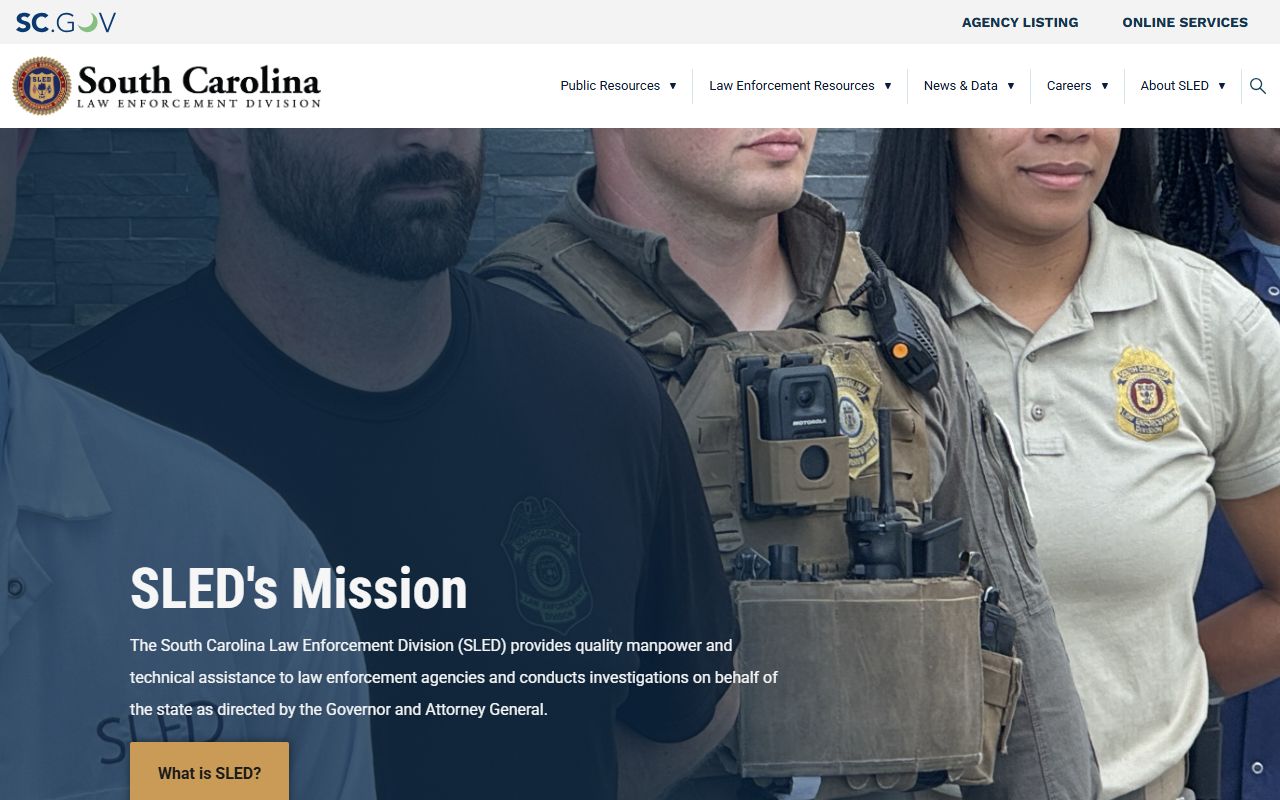
SLED processes thousands of criminal history checks each year for residents of South Carolina. The CATCH system does not include wanted persons or sex offender data.
Note: Charitable organizations in South Carolina pay a reduced fee of $8 per CATCH search instead of the standard $25.
South Carolina CATCH Criminal History Search
The CATCH system at catch.sled.sc.gov is a name-based search tool. You need a last name, first name, and date of birth to run a check. Results show criminal history records on file with SLED in South Carolina. If more than one person matches, the system flags it as "Special Processing Required." This means a staff member must review the results by hand before they can be shared.
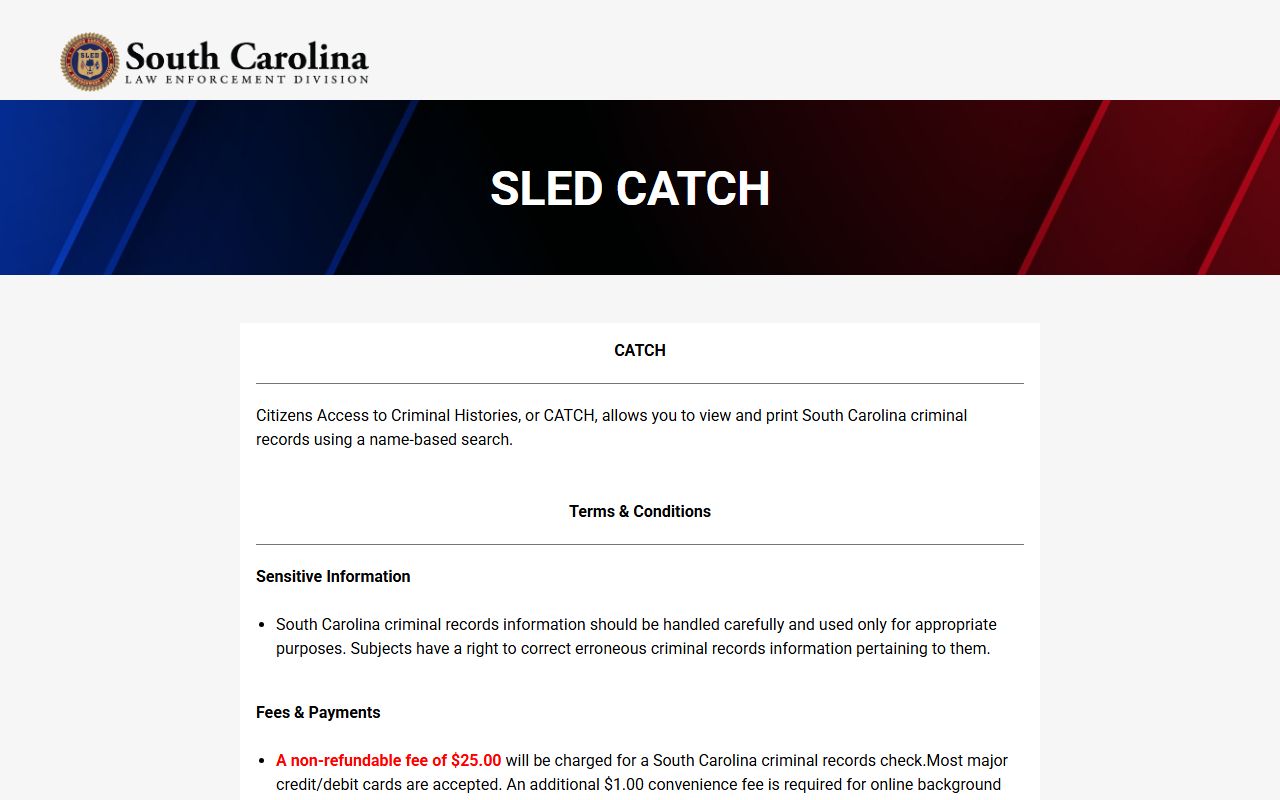
The CATCH tool is useful for finding arrest and booking data tied to a specific person in South Carolina. It pulls from records submitted by local agencies across the state. Keep in mind that not all booking releases appear in CATCH right away. Local jails send data to SLED, but there can be a delay. For the most current booking release data, contact the county detention center in South Carolina where the arrest took place.
Booking Releases and South Carolina Inmate Records
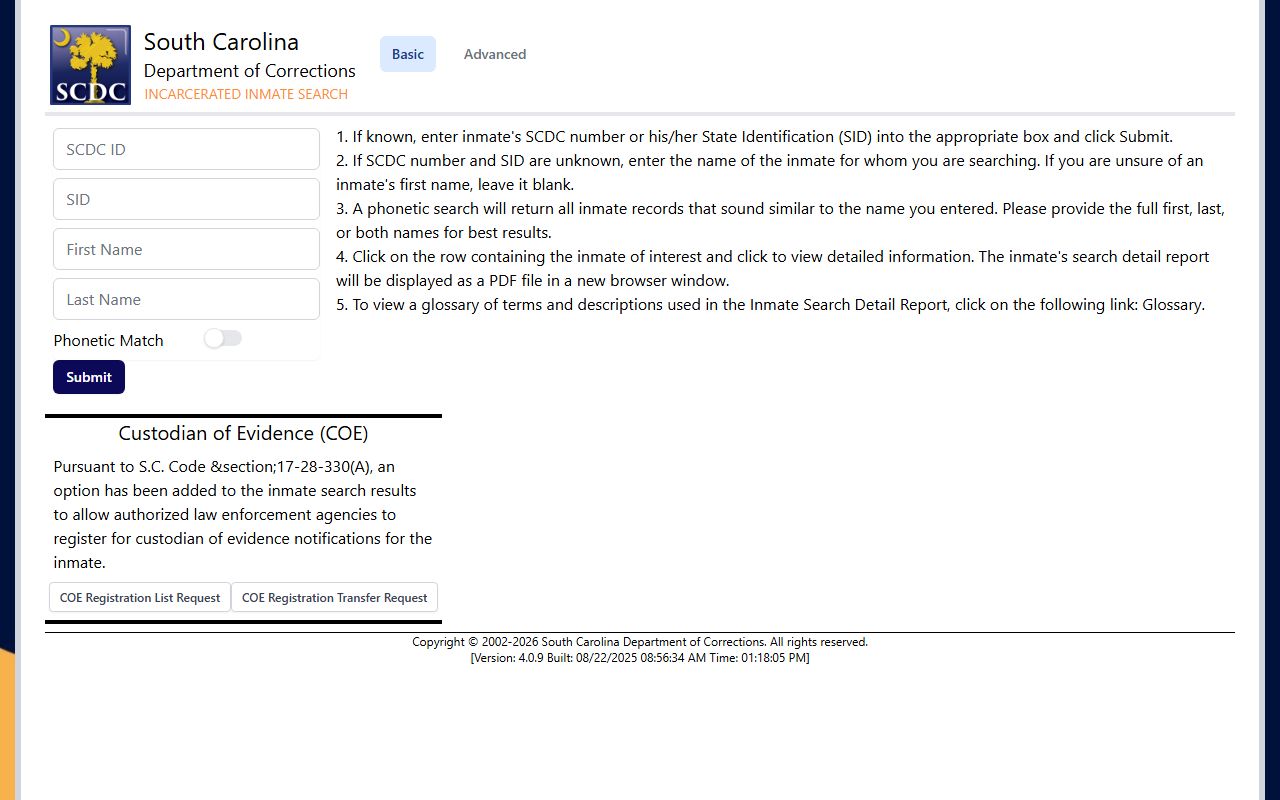
The South Carolina Department of Corrections runs its own inmate search tool. This system shows inmates currently held in state prisons as of midnight on the prior day. It is free to use and open to the public. However, it does not show people held in county jails. It also excludes those on parole or probation in South Carolina.
The SCDC public search portal lets you look up inmates by name or ID number. Results include the offense, sentence length, and projected release date. This tool is best for state prison records rather than local jail booking releases. For county-level booking releases in South Carolina, you should contact the local sheriff or detention center. The SCDC toll-free number is 1-866-727-2846. Report errors to Ombudsman@doc.sc.gov.
No juvenile booking information is available through this system. South Carolina law under S.C. Code Ann. sections 20-7-8505 and 20-7-8515 protects juvenile records from public disclosure.
South Carolina FOIA and Booking Release Access
The South Carolina Freedom of Information Act governs access to public records. Found at S.C. Code Ann. section 30-4-10 et seq., this law is often called the "Sunshine Law." It was adopted in 1987. The law creates a presumption that all records held by public bodies are open to the public. Section 30-4-15 states that the law must be read in a way that lets citizens learn about their government and its actions in South Carolina.
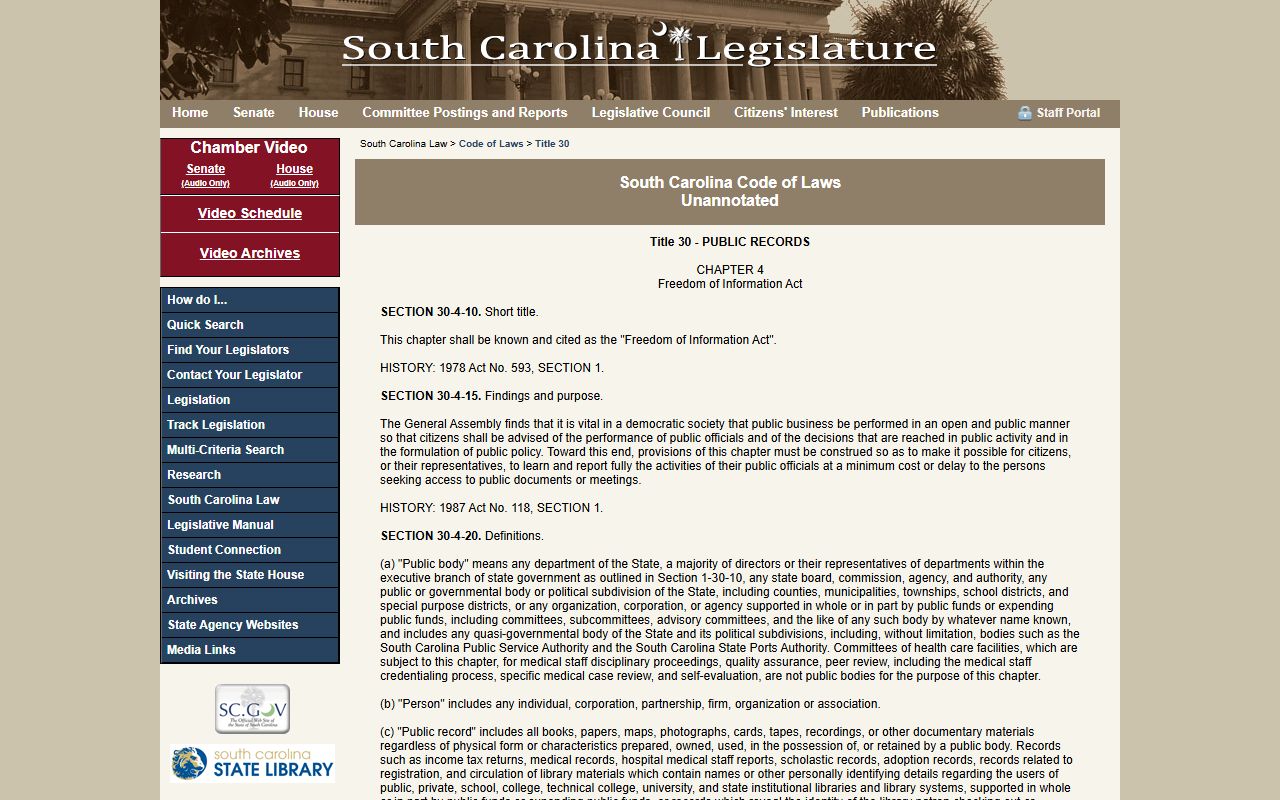
Section 30-4-20 defines "public record" broadly. It covers documents, papers, maps, photos, and electronic records. Booking releases fall under this definition in South Carolina. Section 30-4-30 gives every person the right to inspect and copy public records. You do not need to state why you want the records. Any person can request them at any time.
When you file a FOIA request for booking releases in South Carolina, the agency must respond within 10 business days. For records more than 24 months old, the response time extends to 20 business days. The agency must produce records within 30 calendar days, or 35 days for older records. A request does not have to use a special form. It just needs to be in writing and mention the Freedom of Information Act. You can call the agency first to ask questions before you file. The FOIA Citizens Guide from the SC Press Association is a helpful resource for understanding your rights.
Section 30-4-40 lists exemptions to public access. Law enforcement records that would interfere with an active investigation or prosecution may be withheld in South Carolina. Records related to pending cases can also be restricted. However, basic booking information such as the name, charges, and release status is almost always available to the public.
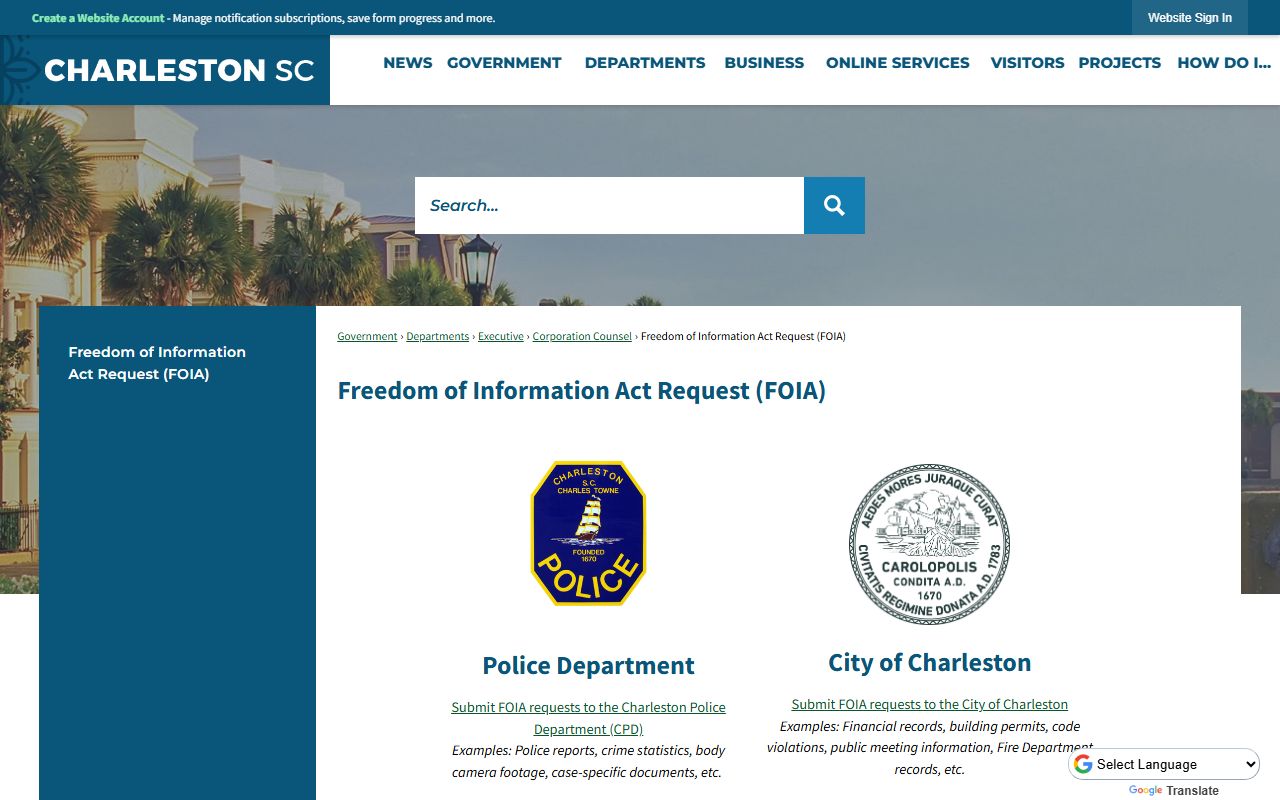
The City of Charleston FOIA page shows an example of how local agencies handle requests for booking releases and other records.
Note: Fees for FOIA requests vary by agency in South Carolina, so ask about costs before you submit a formal written request.
What South Carolina Booking Releases Include
A booking release record in South Carolina contains key facts about an arrest and the person's time in custody. These records are created when someone is brought into a detention center and updated when they are released. The data comes from the arresting agency and the jail staff in South Carolina.
Booking releases in South Carolina typically contain the following details:
- Full name and date of birth of the arrested person
- Physical descriptors such as height, weight, and eye color
- Date, time, and location of the arrest
- Arresting agency and officer
- Charges filed at the time of booking
- Booking number and fingerprint data
- Bail or bond amount and release conditions
Release records show when the person left custody. They note the type of release. This could be bond, personal recognizance, time served, or transfer to another facility. Some counties in South Carolina also include a mugshot with the booking record. The level of detail varies from one county to the next across the state.
Booking Releases and Court Records in South Carolina
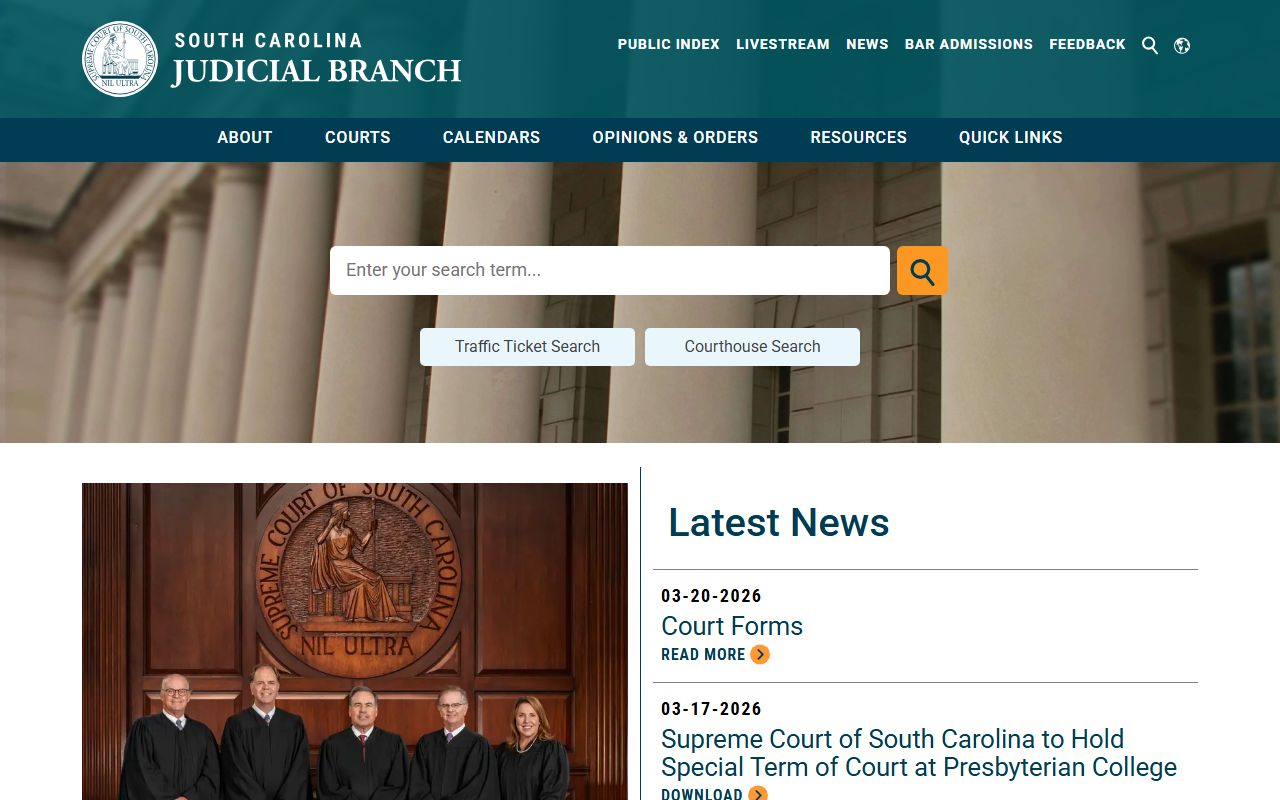
After an arrest and booking in South Carolina, the case moves to the court system. The South Carolina Judicial Branch maintains a public index of court records. You can search criminal cases across all 46 counties for free. The system shows charges, court dates, disposition, and sentencing information. Search by case number, party name, or attorney at the case records search page.
Court records supplement booking releases by showing what happened after the arrest. A booking release tells you the charges at the time of arrest in South Carolina. Court records tell you the outcome. Was the case dismissed? Did the person plead guilty? Was there a trial? These records together paint a full picture of what took place. The court system in South Carolina is free to search online.
Expungement of Booking Releases in South Carolina
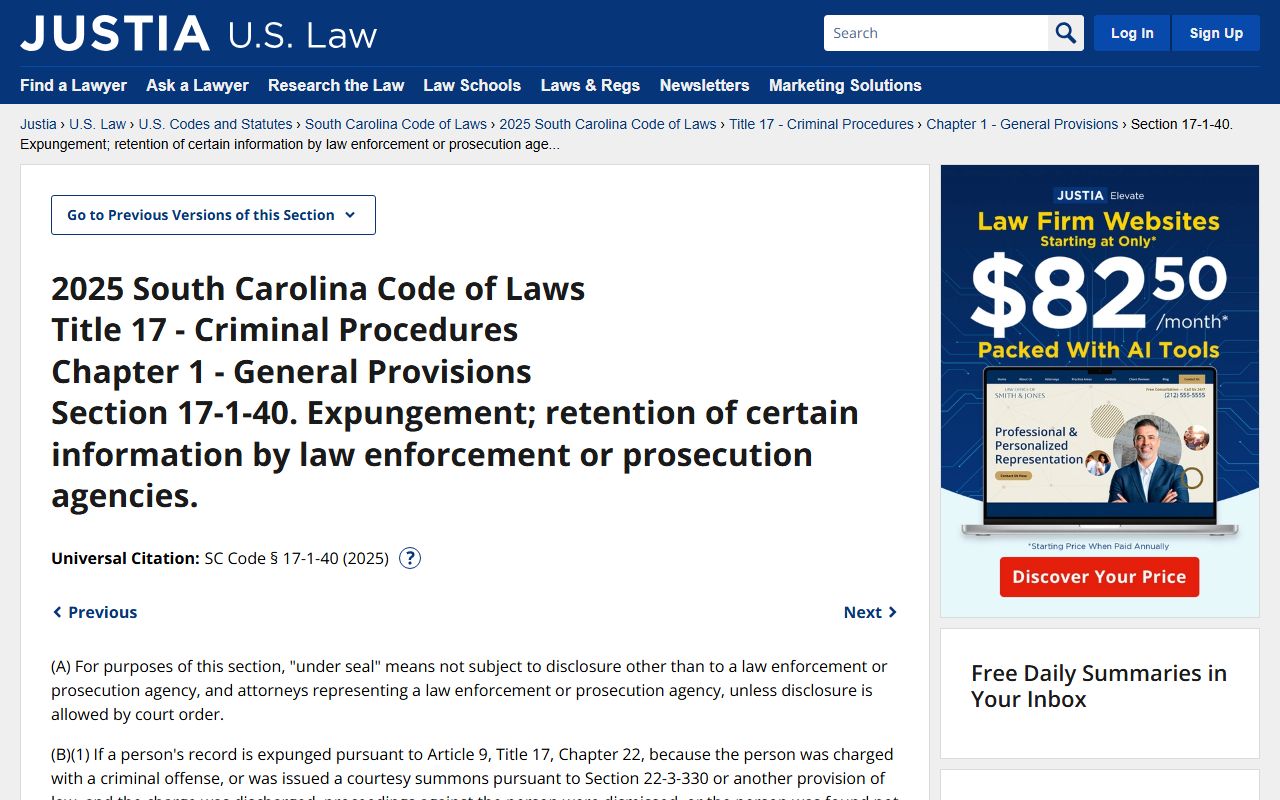
South Carolina law allows certain booking releases to be sealed through expungement. Under S.C. Code Ann. section 17-1-40, detention facilities must retain booking records under seal for 3 years and 120 days after an expungement order is granted. During that period, the records are not public. They are exempt from disclosure under FOIA. Only a court order can release sealed booking records in South Carolina.
Expungement does not destroy the records. It removes them from public view in South Carolina. After the retention period ends, the records may be destroyed. People who qualify for expungement can petition the court. Eligible cases include dismissed charges, not guilty verdicts, and certain first offenses. The process requires filing paperwork with the court and paying a fee. Once the order is signed, the booking release is sealed from public access in South Carolina.
Note: Expunged booking releases in South Carolina cannot be accessed through FOIA requests or standard public record searches.
South Carolina Mugshot Publication and Booking Records
South Carolina has a specific law about publishing mugshots and booking records. Under S.C. Code Ann. section 17-1-60, it is unlawful to publish arrest or booking records while knowing that removal requires a payment. This targets websites that post mugshots and charge people to take them down.
If charges were dismissed, expunged, or resulted in a not guilty verdict, the person can request removal. They must send a certified mail request to the publisher. The publisher then has 30 days to take down the booking record and mugshot. Failure to comply violates South Carolina law. This statute protects people whose cases ended without a conviction from having their booking photos used against them.
Booking Release Alerts in South Carolina
VINELink offers free booking release alerts to the public. This victim notification system lets you register for updates when someone's custody status changes in South Carolina. You can get alerts by phone, email, or TTY. The service is anonymous and available around the clock, seven days a week.
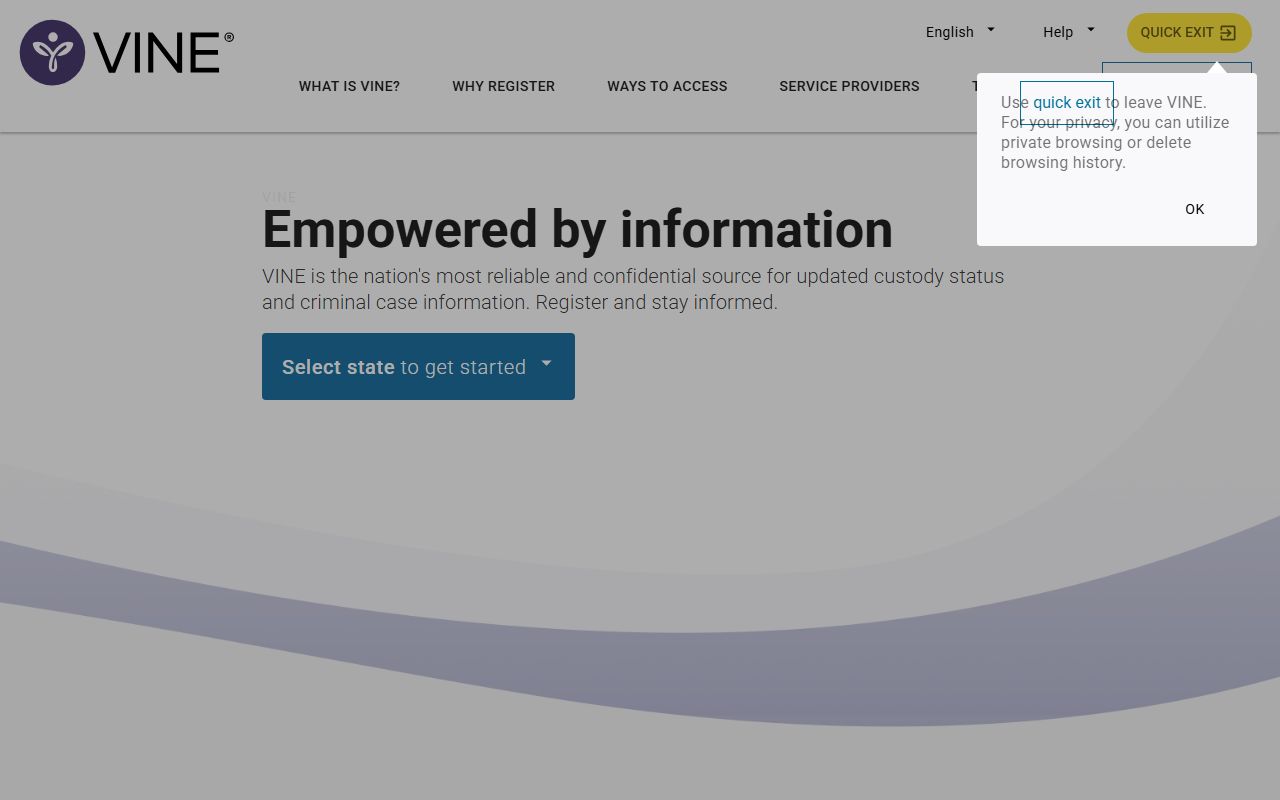
VINELink covers facilities across South Carolina. You search by the person's name or ID number. Once you register, the system sends you a notice when that person is released from custody. This is a valuable tool for crime victims who want to stay informed about booking releases in South Carolina.
County Booking Releases Across South Carolina
Every county in South Carolina runs its own detention center with separate booking release records. The level of online access varies by county. Some counties, like Horry and Charleston, post daily booking and release reports on their websites. Others require you to call or visit in person. Each of the 46 county Sheriff's Offices in South Carolina serves as the local authority for booking release data.
Large counties process more bookings each day. Greenville, Richland, Charleston, and Horry counties handle the highest volume of arrests and booking releases in South Carolina. Smaller counties like McCormick, Allendale, and Saluda see far fewer. Regardless of size, each county must comply with the same FOIA rules for releasing booking records to the public.
The Municipal FOIA Guide from MASC explains how local governments in South Carolina should handle public records requests, including those for booking releases.
Note: Some county detention centers in South Carolina update their online booking release logs every few hours, while others update once per day.
Browse South Carolina Booking Releases by County
Each county in South Carolina operates a detention center that maintains booking and release records. Pick a county below to find local arrest and booking release resources in that area.
Booking Releases in Major South Carolina Cities
Residents of major cities can search booking releases through their county detention center. Pick a city below to learn about booking release records in that area of South Carolina.